Build Your Free Learning Stack
Select your learning goals below to generate a custom, zero-cost study plan based on the article's recommendations.
Choose Your Goals
Your Personalized Curriculum
Pro Tip:
Combine these tools for maximum efficiency. For example, use Anki to memorize vocabulary from BBC Languages, or take notes in Notion while watching lectures on Coursera.
Let’s be honest: the word "free" in the app store usually means "try it for three days before we charge you." You download a promising language or coding app, watch two videos, and then hit a paywall that demands a monthly subscription. It is frustrating. But here is the good news: there are still high-quality educational apps that are genuinely, completely free. No hidden fees. No premium tiers locking away the best content.
Finding these gems requires looking past the flashy marketing of mainstream giants and focusing on platforms backed by non-profits, universities, or open-source communities. These organizations have different goals than typical tech startups. They want knowledge to spread, not just to generate recurring revenue. In this guide, we will break down which apps are truly free, what they offer, and how you can use them to learn almost anything without spending a dime.
The Gold Standard: Non-Profit Open Platforms
When we talk about "totally free," we are mostly talking about non-profit organizations. These entities do not have shareholders to please. Their mission is education, period. The biggest name in this space is Khan Academy.
Khan Academy is a non-profit educational organization created in 2006 with the goal of providing a free, world-class education for anyone, anywhere. It covers everything from early math and grammar to calculus, physics, organic chemistry, and even SAT prep. The interface is clean, the lessons are bite-sized, and there are zero ads. You can track your progress, earn badges, and build a skill tree. It is as close to a complete school curriculum as you can get for free.
Another heavyweight is Coursera. Now, Coursera does charge for certificates and specialized tracks, but their "Audit" mode is a loophole many people miss. When you click "Enroll" on a course from a university like Yale or Stanford, look for the small link that says "Audit this course." This allows you to access all the video lectures and reading materials for free. You just won’t get graded assignments or a certificate at the end. For pure learning, that is often all you need.
Language Learning Without the Paywall
Language apps are notorious for freemium models. Duolingo, for example, is free but filled with ads and limits your "hearts" (lives). If you make too many mistakes, you wait or pay. That is not "totally free" in spirit, even if it is in price.
If you want a truly unrestricted experience, look at Memrise or Busuu’s basic tier, but the real champion here is BBC Languages. While the full interactive suite has been archived, the core vocabulary and phrase lists remain accessible via web and some legacy app versions. However, for a modern, active app, consider LingQ. Wait, LingQ has a paid tier. Okay, let’s go deeper. Try Anki. It is a flashcard app based on spaced repetition. The Android version is free. The iOS version costs money, but you can use the web version on your iPhone for free. It is clunky, but it works.
A better bet for languages is using YouTube channels dedicated to teaching specific languages, combined with a note-taking app like Notion or Obsidian (both free for personal use). There are entire courses on Spanish, French, and Japanese hosted on YouTube by educators who don’t gatekeep their content. Pair that with free dictionary apps like WordReference, and you have a powerful, cost-free stack.
Coding and Tech Skills
Learning to code is one of the most valuable skills you can acquire, and the industry has embraced open-source education. freeCodeCamp is the undisputed king here.
freeCodeCamp is an open-source community and platform that helps millions of people learn to code by building projects. It offers certifications in JavaScript, Python, Data Visualization, and more. The entire curriculum is free. No ads. No upsells. You write code in a browser-based editor, pass tests, and move on. It is rigorous and respected by employers.
For those who prefer video tutorials, Codecademy has a free tier, but it is limited. A better alternative is Scrimba. They have a generous free section where you can pause and edit the instructor’s code directly. It is an innovative approach to learning front-end development. Additionally, GitHub Education provides students with free access to many developer tools, though that requires a valid student email.
If you are interested in data science, Kaggle Learn offers micro-courses in Python, Pandas, and Machine Learning. All free. All practical. You can run code snippets directly in the browser using Jupyter notebooks. It is a fantastic way to start without installing complex software on your computer.
University-Level Knowledge
You do not need a degree to access university-level content. MIT OpenCourseWare (OCW) publishes virtually all of its course content online for free. While it doesn’t have a dedicated mobile app, the website is mobile-friendly, and you can bookmark courses. You get lecture notes, exams, and sometimes videos. It is raw, academic, and incredibly deep.
Similarly, edX, founded by Harvard and MIT, allows you to audit courses for free. Like Coursera, you pay for the verified certificate, but the knowledge is yours for nothing. Topics range from philosophy and history to computer science and engineering. The quality is comparable to what paying students receive on campus.
| App Name | Primary Focus | Free Features | Limitations |
|---|---|---|---|
| Khan Academy | K-14 Math, Science, Humanities | All lessons, practice exercises, progress tracking | No official certificates |
| freeCodeCamp | Web Development, Coding | Full curriculum, certifications, project-based learning | Text-heavy, less video content |
| Coursera (Audit Mode) | University Courses | Video lectures, reading materials | No graded assignments, no certificate |
| MIT OpenCourseWare | Higher Education | Lecture notes, exams, videos | No interaction with instructors |
| Anki (Android/Web) | Spaced Repetition Flashcards | Unlimited decks, custom creation | iOS app is paid; steep learning curve |
Skills Beyond Academics
Education isn’t just about math and code. What about cooking, photography, or music? Skillshare used to have a free trial, but now it’s subscription-only. However, YouTube remains the largest free educational platform on earth. Channels like CrashCourse cover world history, biology, and literature in engaging, short episodes. For creative skills, platforms like DaVinci Resolve (video editing) offer extensive free tutorials within their own ecosystem.
For music, Yousician has a free trial, but Fender Play is also paid. A truly free option is using tabs and chord charts from sites like Ultimate Guitar (basic features are free) combined with metronome apps. Many musicians teach themselves through free resources online. The key is curation: finding the right channels and sticking with them.
How to Verify an App is Truly Free
Not every app labeled "Free" is actually free. Here is a quick checklist to avoid surprise charges:
- Check the Business Model: Is it a non-profit? If yes, it’s likely truly free. If it’s a private company, check if it makes money from ads or data collection.
- Look for "In-App Purchases": This label in the app store means you can buy things inside the app. It doesn’t mean you must, but it suggests features might be locked.
- Read Recent Reviews: Search for keywords like "paywall," "subscription," or "hidden fees." Users will quickly complain if a previously free app starts charging.
- Test the Core Feature: Download the app and try to do the main activity. If you can’t proceed after five minutes, it’s probably freemium, not free.
The Hidden Cost of Free
If an app is free, what is the catch? Usually, it’s one of three things:
- Ads: Some free apps support themselves with advertisements. This can be distracting, but it keeps the content free. Khan Academy, for instance, has very few ads because it relies on donations.
- Data Privacy: Some apps collect user data to sell to advertisers. Always check the privacy policy. Reputable non-profits are transparent about this.
- Limited Support: Free apps may not offer customer support or personalized feedback. You are on your own to troubleshoot issues or understand difficult concepts.
Despite these trade-offs, the value of free education is immense. You can learn a new language, master a programming language, or understand quantum physics without spending a cent. The barrier to entry is gone. The only requirement is discipline.
Building Your Free Learning Stack
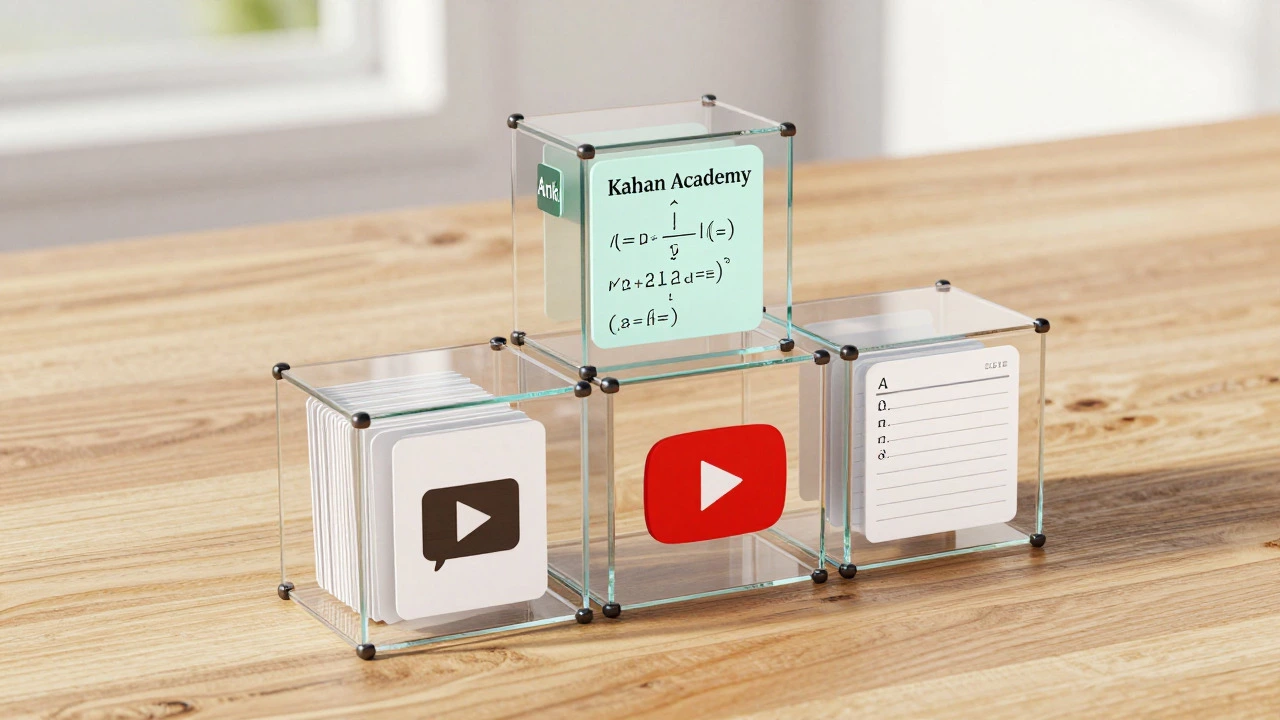
To maximize your learning without spending money, combine several free tools. For example:
- Use Khan Academy for foundational math and science.
- Use freeCodeCamp for coding projects.
- Use Anki to memorize vocabulary or facts from other courses.
- Use YouTube for visual explanations and creative skills.
- Use Notion to organize your notes and track your progress.
This combination gives you a comprehensive education system. It is modular, flexible, and entirely free. You can switch between topics as your interests change. You are not locked into a single platform’s curriculum.
In 2026, the question is not whether you can afford education. The question is whether you have the time and focus to engage with it. With the right free apps, the path to knowledge is open to everyone. Start with one subject, pick one tool, and begin today. The best time to start was yesterday. The second best time is now.
Is Khan Academy really 100% free?
Yes. Khan Academy is a non-profit organization funded by donations. All its lessons, practice exercises, and diagnostic tools are completely free with no ads or subscriptions required.
Can I get a university degree for free using these apps?
Most apps offer course content for free, but accredited degrees usually require tuition. However, platforms like edX and Coursera allow you to audit courses for free. Some universities offer free online degrees, but they are rare and competitive.
What is the best free app for learning to code?
freeCodeCamp is widely considered the best free resource for learning web development and coding. It offers a full curriculum with certifications. Other good options include Scrimba for front-end design and Kaggle Learn for data science.
Are there any free language learning apps without ads?
Most popular language apps like Duolingo have ads in their free versions. For a truly ad-free experience, you might need to look at open-source options or use a combination of free YouTube channels and flashcard apps like Anki (on Android or Web).
Do free educational apps provide certificates?
Some do. freeCodeCamp offers free certifications upon completing projects. Khan Academy does not issue formal certificates. Coursera and edX offer certificates, but you usually have to pay for them unless you qualify for financial aid.