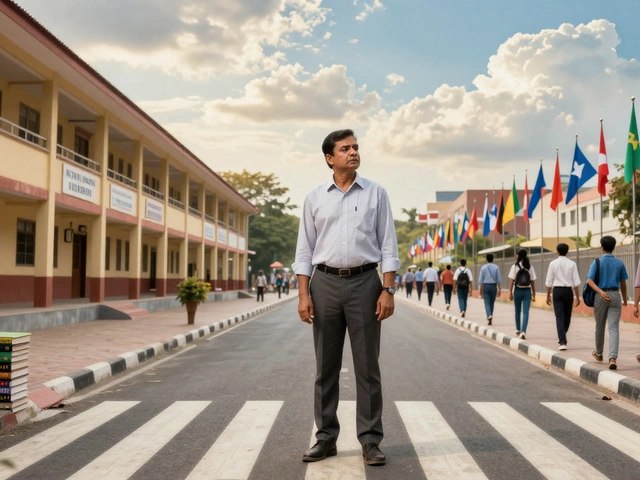
Hardest Country: Where Education Is Most Demanding
When people talk about the hardest country, a nation where education systems demand extreme discipline, long hours, and high-stakes testing. Also known as the most rigorous education system, it’s not about how much you learn—it’s about how much you can survive. India stands out not because it has the most homework, but because its system turns learning into a high-pressure marathon with no finish line in sight.
The CBSE, India’s national school board designed to prepare students for competitive exams like JEE and NEET isn’t just a curriculum—it’s a filter. Students spend years memorizing formulas, solving past papers, and sacrificing sleep just to get a shot at engineering or medicine. Meanwhile, the UPSC Civil Services Examination, the toughest competitive exam in the world demands six to eight years of preparation for a single job, with less than 0.2% of applicants succeeding. These aren’t isolated cases. They’re part of a culture where education is tied to survival, status, and family honor.
It’s not just about exams. The NEET, the medical entrance exam that decides a student’s entire future in one day has no official limit on attempts. You can take it five, ten, even fifteen times if you keep trying. That’s not motivation—it’s a system that expects you to burn out before you break through. And it’s not just India. Countries like South Korea and China have their own brutal versions, but India’s scale, intensity, and social pressure make it unique. The hardest country isn’t the one with the hardest math—it’s the one where failing feels like letting everyone down.
What you’ll find below isn’t just a list of articles. It’s a map of the battlefield. From the grueling coaching institutes like Allen and Aakash, to the sleepless nights of JEE aspirants, to the real stories of students who cracked NEET after five tries—this collection shows you what it actually takes to survive. No fluff. No sugarcoating. Just the facts from the front lines.
Popular Post