Education System Fit Calculator
Find the Best Education Fit for Your Child
Answer a few questions to determine which education system aligns best with your child's personality and your family's goals.
Your Child's Best Fit
When parents ask if Dubai education is better than India, they’re usually not just comparing classrooms. They’re weighing a child’s future - access to global universities, stress levels, teaching styles, and whether the system prepares kids for life, not just exams. For families moving from India to Dubai, or those stuck between choosing CBSE in Mumbai or an international school in Dubai, the decision isn’t about which is ‘better’ - it’s about what fits your child’s needs.
CBSE in India: Structure, Pressure, and Results
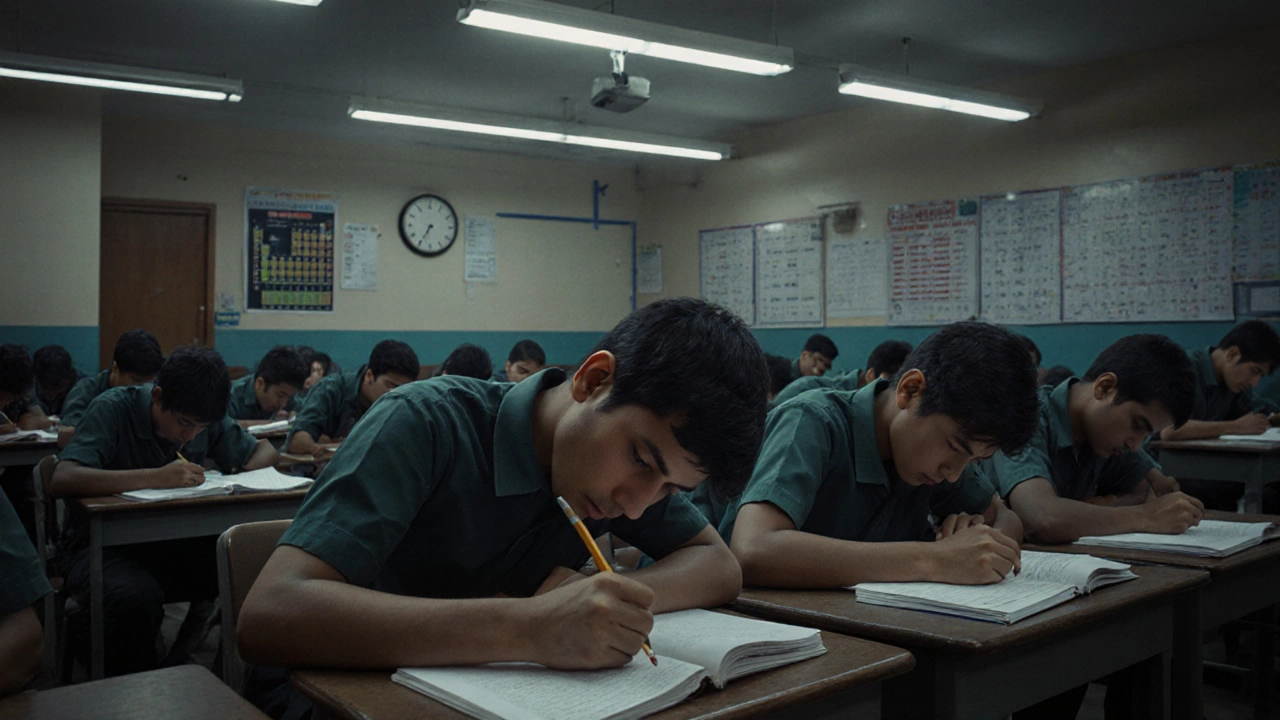
The Central Board of Secondary Education (CBSE) is the most common school board in India, used by over 20,000 schools. It’s known for its standardized curriculum, heavy focus on rote learning, and high-stakes exams like the Class 10 and Class 12 board tests. These exams determine college admissions - especially for engineering and medicine, where ranks in JEE and NEET can make or break a career path.
Students in CBSE schools often start preparing for competitive exams as early as Grade 8. A typical day might include school from 7:30 a.m. to 2 p.m., followed by coaching classes until 8 p.m. Sleep is often under six hours. A 2023 survey by the Indian Council for Research on International Economic Relations found that 68% of CBSE students in urban areas reported chronic stress by Grade 10.
But there’s a reason it works for so many. CBSE has a clear, uniform structure. If you move from Delhi to Chennai, the syllabus doesn’t change. The textbooks are predictable. The exam pattern is fixed. For families who value discipline, measurable outcomes, and a direct path to top Indian universities, CBSE delivers.
Dubai Schools: Flexibility, English Focus, and Global Readiness
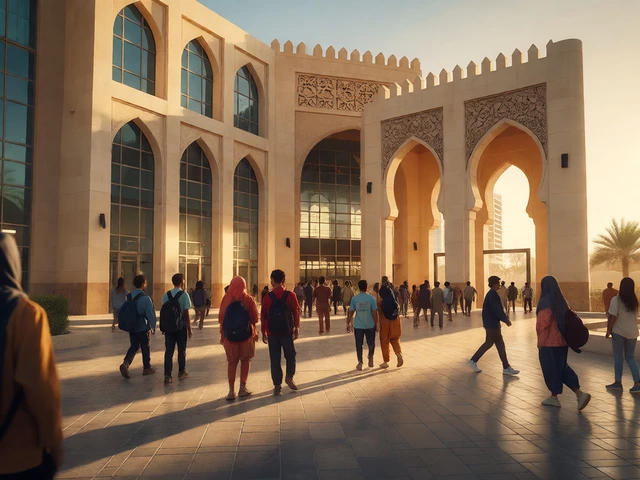
Dubai doesn’t have one national curriculum. Instead, schools follow systems like the British (IGCSE/A-Levels), American (Common Core), IB, or Indian (CBSE/ICSE). Most expat families choose British or IB schools. These schools emphasize critical thinking, project-based learning, and continuous assessment over one final exam.
In a Dubai IB school, a Grade 10 student might spend three months researching climate change impacts on the Gulf, writing a 4,000-word essay, presenting findings to a panel, and collaborating with peers across cultures. There’s no single exam to pass - but there’s constant feedback, portfolio building, and skill development.
English is the primary language of instruction in most international schools. Students speak it daily, write essays in it, debate in it. By Grade 12, many are fluent enough to apply to universities in the UK, US, Canada, or Australia without needing extra language tests.
Teachers in Dubai are often hired from the UK, Australia, or Canada. Class sizes average 18-22 students. There’s more room for individual attention. Extracurriculars - from robotics to theater - are part of the school day, not an after-school add-on.
CBSE vs. Dubai: Curriculum Comparison
Here’s how the two systems stack up in key areas:
| Feature | CBSE (India) | Dubai International Schools (Typical) |
|---|---|---|
| Primary Language | English + Hindi/Regional | English (90%+ of instruction) |
| Assessment Style | High-stakes board exams (Class 10/12) | Continuous assessment, projects, portfolios |
| Exam Pressure | Very high - determines university admission | Moderate - no single exam decides everything |
| Curriculum Flexibility | Rigid - national standard | High - choose IGCSE, IB, or American |
| Global Recognition | Strong in India and Gulf; limited in North America/Europe | Widely accepted worldwide |
| Focus Areas | Math, Science, memorization | Critical thinking, communication, creativity |
One parent in Dubai told me her son, who moved from a CBSE school in Bangalore, cried for three weeks after his first assignment in Dubai: ‘Write about a time you failed and what you learned.’ In India, failure wasn’t discussed - only scores mattered.

Who Benefits Most from Each System?
If your child is:
- Goal-oriented and thrives under structure - CBSE might be the better fit. They’ll learn discipline, time management, and how to handle pressure - skills that serve them well in Indian engineering or medical colleges.
- Curious, creative, and wants to study abroad - Dubai’s IB or IGCSE system gives them a head start. Universities in the US and UK prefer students who can write essays, lead projects, and think independently.
- Struggling with anxiety or burnout - Dubai’s system is less likely to push them to the edge. The pressure is spread out, not concentrated in one exam.
- Planning to return to India for college - CBSE is safer. Admissions to top Indian institutions still heavily favor board scores. Switching systems late can create gaps.
There’s also the cost factor. A top CBSE school in India might cost ₹1-2 lakh per year. A top international school in Dubai? Between AED 40,000 and AED 80,000 annually (roughly ₹9-18 lakh). That’s not just tuition - it’s also uniforms, transport, field trips, and tech fees.
Real Stories: What Parents Actually Say
One mother from Pune moved to Dubai for her husband’s job. Her daughter, 14, was top of her class in CBSE but hated school. In Dubai, she joined the school newspaper, started a podcast on mental health, and got accepted to a university in Canada. ‘She’s not the same child,’ the mother said. ‘She talks like she believes she can change things.’
Another family, from Hyderabad, kept their son in a CBSE school in Dubai because they planned to return to India for his engineering prep. He scored 97% in Class 12 CBSE - but struggled in his first year of engineering because he’d never learned how to ask questions or work in teams. ‘The system taught him how to memorize,’ he told me. ‘Not how to think.’
It’s Not About Better - It’s About Fit
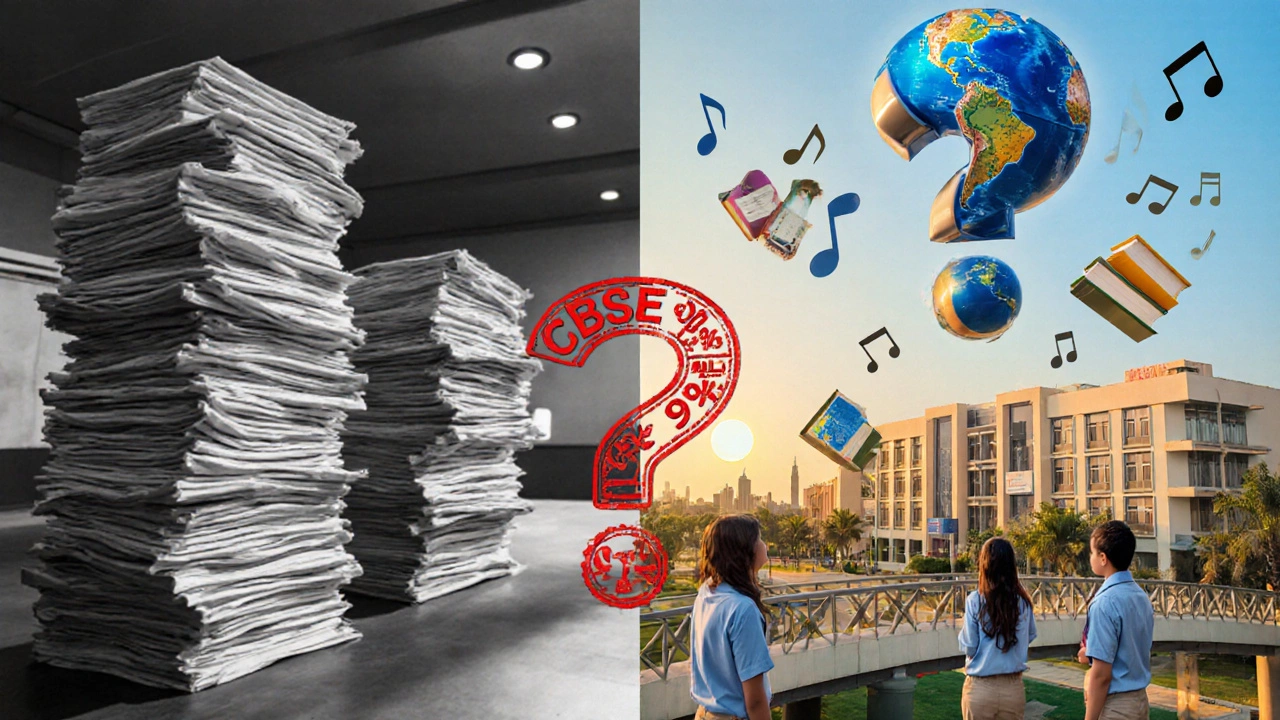
Dubai education isn’t ‘better’ than India’s. India’s CBSE system produces world-class engineers, doctors, and researchers - many of whom now work in Silicon Valley or run startups in Bengaluru. But it’s not designed for every child.
Dubai’s system isn’t perfect either. It’s expensive. It can feel disconnected from local culture. Some students struggle with the lack of clear structure. And not all international schools are equal - some are just expensive with low standards.
The real question isn’t ‘Which is better?’ It’s: What kind of learner is your child? Do they need clear rules and high stakes to perform? Or do they need space to explore, fail, and rebuild?
If you’re planning to stay in Dubai long-term, or your child wants to study overseas, the international curriculum gives them tools India’s system doesn’t emphasize. If you’re planning to return to India for college, CBSE gives them the clearest path - but you’ll need to supplement critical thinking skills on your own.
What Should You Do Next?
Here’s a simple checklist:
- Ask your child: ‘Do you feel stressed or excited about school?’
- Look at your long-term plans: Will you stay in Dubai? Return to India? Move elsewhere?
- Visit two schools - one CBSE and one international. Watch how teachers interact with students.
- Check the university acceptance rates of each school’s past graduates.
- Don’t choose based on what your neighbor did. Choose based on what your child needs.
There’s no single right answer. But there is a right fit - and that’s what matters more than rankings or reputation.
Is CBSE accepted in Dubai universities?
Yes, CBSE is accepted by universities in Dubai, especially for Indian and South Asian students. However, top universities like the American University of Sharjah or Khalifa University often prefer IB or A-Levels because they align better with international admissions standards. CBSE students may need to take additional English proficiency tests or bridge courses.
Can a student switch from CBSE to an international curriculum in Grade 10?
It’s possible, but challenging. CBSE’s curriculum is more advanced in math and science by Grade 10. Switching to IGCSE or IB means catching up on topics like extended essays, internal assessments, and critical analysis - skills not emphasized in CBSE. Most schools recommend switching by Grade 8 or 9 for smoother transition.
Do Dubai schools teach Hindi or Indian culture?
Most international schools in Dubai focus on global curricula and English instruction. However, many offer Hindi as a second language, especially in schools catering to Indian expats. Cultural events like Diwali or Holi are often celebrated, but they’re not part of the core curriculum like they are in CBSE schools in India.
Is the CBSE syllabus easier than the IB curriculum?
It’s not about easier - it’s different. CBSE is more predictable and content-heavy. IB is broader, requiring students to balance six subjects, a theory of knowledge course, extended essay, and creativity activities. Many students find IB harder because it demands independent thinking, not memorization. But it also prepares them better for university.
Which system gives better chances for studying in the US?
Students from IB or A-Level schools in Dubai have a clear advantage. US colleges look for well-rounded applicants with research skills, leadership, and writing ability - all core parts of the IB program. CBSE students can still get in, but they’ll need stronger extracurriculars, SAT scores, and personal statements to stand out.