
Hireability Score Calculator
How ready are you to get hired?
This calculator assesses your portfolio quality based on what hiring managers actually look for in 2026. Answer the questions below to get your personalized score.
Your Hireability Score
What does this mean?
Your score is based on what hiring managers actually look for. A score of 70+ means you're ready to apply for jobs. Scores below 70 mean there's room for improvement.
Every month, someone asks: Do self-taught coders get hired? It’s not a hypothetical question anymore. In 2026, nearly 40% of entry-level software developers in New Zealand and the U.S. didn’t graduate with a computer science degree. Companies aren’t just tolerating self-taught coders-they’re actively recruiting them. But that doesn’t mean anyone who watches YouTube tutorials and builds a few websites gets a job. There’s a difference between learning on your own and being hireable.
What hiring managers actually look for
Forget the myth that employers care about your diploma. They care about what you can do. A hiring manager at a Wellington tech startup told me last week: "I don’t ask where they went to school. I ask what they’ve built."
Companies want proof. That means:
- A GitHub profile with real projects-not just "Hello World" clones
- Code that’s clean, commented, and follows basic structure
- Deployed apps you can show, not just local files
- Clear explanations of what you built and why
One candidate from Auckland landed a junior dev role after posting a weather app that pulled live data, fixed a bug in the API response, and added dark mode. He didn’t have a degree. He had a GitHub repo with 17 commits and a 2-minute demo video.
The skills that matter more than a degree
Self-taught coders often outperform degree-holders in practical areas because they learn by doing. Employers notice this.
Here’s what’s actually tested in interviews today:
- Problem-solving under time pressure (LeetCode-style challenges)
- Debugging real code snippets (not theory)
- Understanding version control (Git, not just "I use GitHub")
- Working with APIs and databases (PostgreSQL, Firebase, REST endpoints)
- Writing tests-even basic ones
These aren’t taught in lectures. They’re learned by breaking things, fixing them, and doing it again. That’s why many self-taught coders score higher in technical screenings.
Where self-taught coders are getting hired
You won’t find many self-taught coders in large banks or government IT departments-yet. But they’re everywhere else.
Startups, SaaS companies, digital agencies, and remote-first teams are the biggest employers of self-taught developers. In New Zealand, companies like Xero, Trade Me, and smaller firms like Luma and Kogan Page hire coders without degrees regularly.
Remote roles are even more open. A developer in Dunedin got hired by a Canadian fintech startup because their portfolio showed they could build secure payment forms and handle PCI compliance basics. No interview with HR. Just a code review and a Zoom call.

The gap between learning and landing a job
Many self-taught coders get stuck in the "tutorial hell" loop. They follow 50 YouTube courses. They build 10 apps that look like the tutorial. But they never ship anything real.
Here’s what breaks that cycle:
- Build something that solves a real problem-for yourself, your family, a local business
- Deploy it. Use Netlify, Vercel, or Render. Make it live
- Write about it. Post a short blog or LinkedIn post explaining what you learned
- Ask for feedback. Share your code on Reddit or Discord communities
- Repeat. Build another. Then another.
One woman in Christchurch taught herself JavaScript by rebuilding her mum’s bakery website. She added online ordering, fixed mobile layout issues, and tracked sales data. She posted it on LinkedIn. A local agency reached out within 48 hours. She’s now a junior frontend dev.
Bootcamps vs. self-taught: what’s the difference?
Bootcamps aren’t magic. But they do one thing well: they force structure. You get deadlines, peer reviews, mentor feedback, and a portfolio built in 12 weeks.
Self-taught coders have more freedom-but also more silence. No one checks your progress. No one tells you if your code is bad.
Here’s a quick comparison:
| Factor | Self-taught | Bootcamp |
|---|---|---|
| Cost | $0-$200 (books, courses) | $8,000-$15,000 |
| Time to job | 6-18 months | 3-9 months |
| Feedback | Only if you ask | Regular code reviews |
| Network | Build your own | Classmates + alumni |
| Job placement | None guaranteed | Some offer hiring partnerships |
If you’re disciplined, self-teaching saves money and builds resilience. If you need structure, a bootcamp can accelerate your path.
What to do if you’re self-taught and stuck
Most self-taught coders don’t fail because they’re not smart. They fail because they don’t know how to sell themselves.
Here’s a simple checklist to get unstuck:
- Do you have at least 3 live projects? (Not just GitHub repos-actually running)
- Can you explain your code in plain English to someone who doesn’t code?
- Have you applied to at least 10 jobs in the last month?
- Do you have a LinkedIn profile that says "Junior Developer" and links to your work?
- Have you asked for feedback from someone who works in tech?
If you answered "no" to more than two of those, you’re not ready-not because you lack skill, but because you haven’t made your skills visible.
Real stories from 2025-2026
Here are three people who got hired last year:
- James, 22, Auckland: Worked as a barista. Taught himself Python during night shifts. Built a tool to track inventory for his café. Posted it on Hacker News. Got a call from a logistics startup. Now earns $68k/year.
- Maya, 31, Wellington: Former teacher. Took free Codecademy courses. Built a site for her daughter’s school club. Got noticed by a nonprofit that needed a volunteer dev. They hired her full-time after 6 months.
- Ravi, 19, Christchurch: Dropped out of college. Learned React from freeCodeCamp. Made a job board for local tradespeople. Got a job at a digital agency after they found his site while searching for a contractor.
No degrees. No connections. Just code, persistence, and visibility.
Final truth: It’s not about how you learned. It’s about what you built.
Employers don’t care if you learned from a book, a YouTube video, or a bootcamp. They care if you can write code that works, fix it when it breaks, and explain it to others.
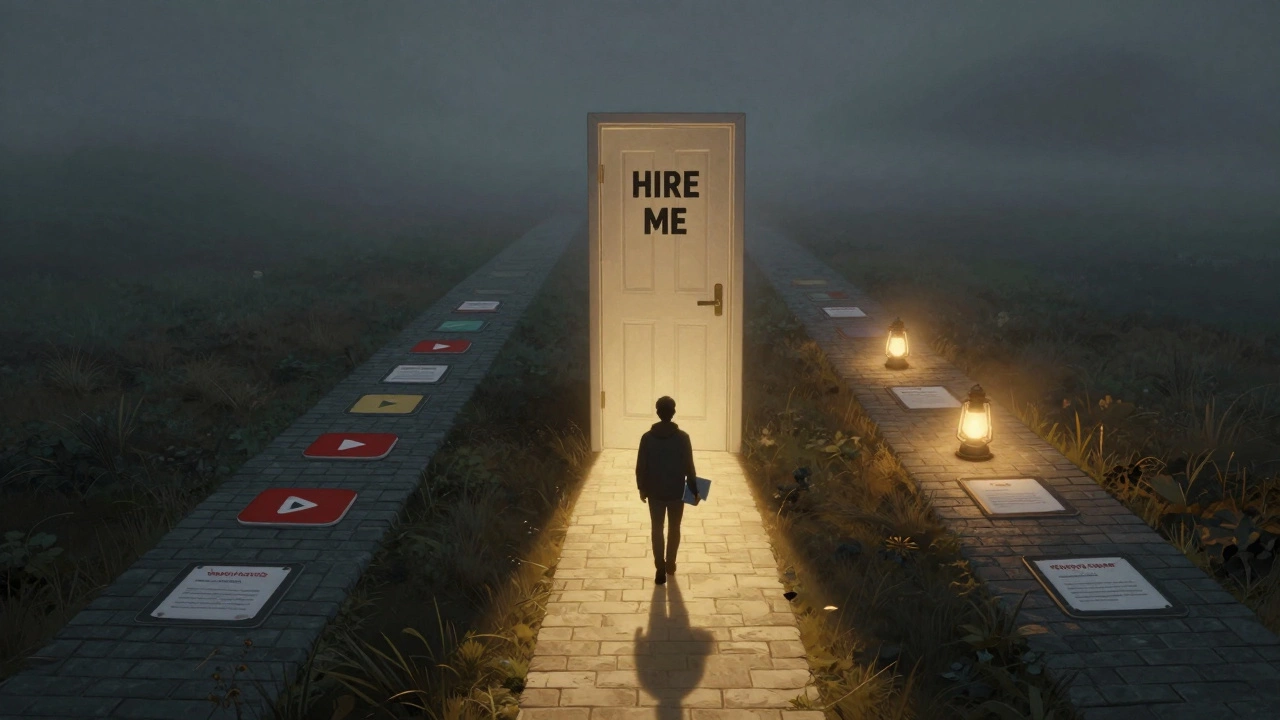
The door is open. But you have to walk through it with something real in your hands-not just a certificate.
Can I get hired without any coding experience?
No-not without any experience. But you can get hired with minimal experience if you’ve built real projects. Start with one small app, deploy it, and show it. Experience isn’t about years-it’s about doing.
Do I need a portfolio to get hired?
Yes. A portfolio isn’t optional anymore. It’s your resume. Employers will check it before they even read your CV. Three live projects with clean code and explanations are better than a 10-page CV with no examples.
Are self-taught coders paid less?
Not at entry level. In New Zealand, junior developers with or without degrees start around $55k-$70k. Pay is based on skill, not credentials. After two years, performance matters more than how you learned.
Is it too late to start if I’m over 30?
No. The average age of a self-taught developer landing their first job in 2025 was 34. Career changers are common. What matters is your ability to learn and ship code-not your birth date.
What’s the fastest way to get hired?
Build one useful app, deploy it, write a short post about it, and share it with local tech groups. Apply to 5 small companies or startups every week. Most hires happen through direct outreach-not job boards.
Next steps if you’re serious
Here’s what to do this week:
- Choose one project idea that solves a small problem you have
- Use free tools: VS Code, GitHub, Netlify
- Build it over 3 days
- Deploy it
- Share it on LinkedIn or Reddit with a short story: "I built this in 3 days with no experience. Here’s how."
That’s it. No degree needed. No money needed. Just action.