JEE Advanced Difficulty & Strategy Estimator
Configure your scenario and click "Analyze" to see predictions based on historical JEE Advanced patterns.
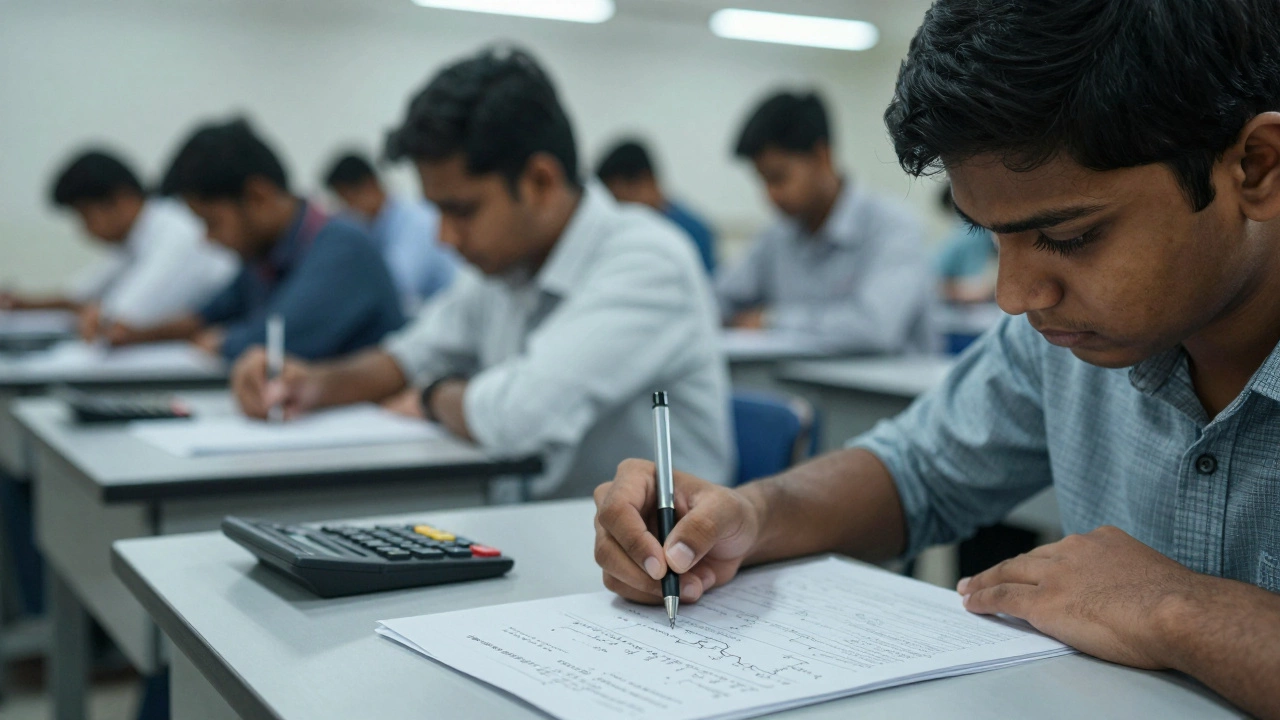
Every year, thousands of students sit for the JEE Advanced, which is the second stage of the Joint Entrance Examination used for admission to Indian Institutes of Technology (IITs). The anxiety surrounding this exam is palpable. Students spend months preparing, only to face a paper that can feel either like a breeze or a brick wall. But here is the truth: there is no single "easiest" year. The perception of difficulty shifts depending on your strengths, the specific set you received, and the scoring pattern.
However, if we look at historical data, student feedback, and cutoff trends, certain years stand out as relatively more manageable than others. Understanding why some papers felt easier-and how to prepare for them-can give you a strategic edge. Let’s break down the history, the patterns, and what "easy" actually means in the context of one of the world's toughest engineering exams.
The Myth of the "Easy" Paper
First, let’s clear up a common misconception. An "easy" JEE Advanced paper doesn’t mean everyone scores high. It usually means the questions are straightforward, direct applications of concepts, with fewer tricks or multi-concept integrations. In these years, the differentiation between candidates comes from speed and accuracy, not just deep problem-solving skills.
Conversely, a "hard" paper often features complex, time-consuming problems that test your ability to think under pressure. When a paper is hard, the cutoff marks drop significantly. This creates a paradox: sometimes, a harder paper is better for you because it reduces competition. If everyone struggles, the rank list compresses, and those who maintain composure gain an advantage.
So, when we ask which IIT made the easiest paper, we are really asking: which year had the most predictable, concept-based questions with minimal ambiguity?
Historical Trends: Years That Felt Manageable
Looking back at the last decade, a few years consistently receive mentions for being relatively fair and structured. While individual experiences vary, these years showed patterns that many students found approachable.
| Year | Difficulty Perception | Key Characteristics | Cutoff Trend |
|---|---|---|---|
| 2015 | Moderate to Easy | Direct conceptual questions; less calculation-heavy | Slightly Higher |
| 2017 | Moderate | Balanced mix of theory and application | Stable |
| 2019 | Challenging but Fair | New pattern introduction caused initial confusion | Dropped slightly |
| 2021 | Relatively Easy | Strong focus on NCERT basics; fewer tricky traps | Raised |
| 2023 | Mixed | Some sets were easier than others; variable difficulty | Variable by branch |
In 2021, for instance, many coaching institutes noted that the physics and chemistry sections were heavily based on fundamental principles. If you had mastered your textbooks, you could score well without needing advanced trickery. Mathematics, however, remained a differentiator. This balance made the overall experience feel less chaotic compared to years like 2016 or 2020, where abstract reasoning was prioritized over rote knowledge.
Why Some Papers Feel Easier Than Others
The difficulty of a JEE Advanced paper isn't random. It depends on several structural factors controlled by the conducting IITs. Here’s what influences whether you’ll find the paper easy or tough:
- Question Type Distribution: Papers with more multiple-choice questions (MCQs) tend to feel easier than those with numerical answer type (NAT) questions, which leave no room for guessing.
- Calculation Load: Heavy calculations in Physics and Chemistry can slow you down, making the paper feel harder even if the concepts are simple.
- Ambiguity: Clear, unambiguous statements make a paper feel fair. Vague wording leads to second-guessing and wasted time.
- Set Variation: JEE Advanced uses multiple sets (A, B, C, etc.) to prevent cheating. Sometimes, Set A might have an easier Physics section, while Set B has an easier Math section. Your luck with the set matters.
For example, in 2018, students reported that the Chemistry section was particularly straightforward, focusing on organic reaction mechanisms and basic inorganic facts. This allowed students to secure quick marks, balancing out the tougher Mathematics section. Such imbalances create the perception of an "easier" paper for those strong in Chemistry.
The Role of the Conducting IIT
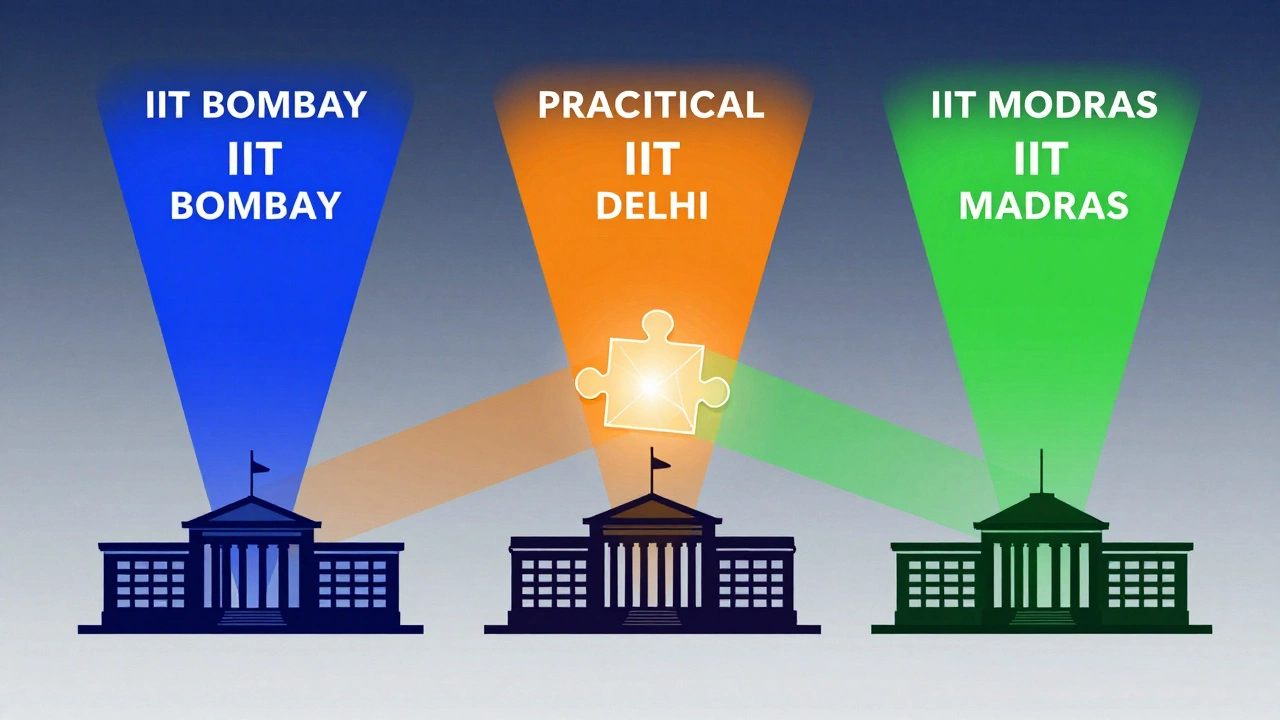
JEE Advanced is conducted by one of the seven IITs each year, rotating among them. Does the host IIT influence the difficulty? Historically, yes, but subtly. Each institute has its own style of question setting.
IIT Bombay, known for a rigorous curriculum with emphasis on conceptual clarity and innovation, tends to set papers that test deep understanding rather than memorization. Their questions often require you to derive solutions from first principles. This can feel harder initially but rewards thorough preparation.
IIT Delhi, recognized for strong engineering programs and practical problem-solving approaches, often includes more application-based questions. These might feel more intuitive to students who practice real-world scenarios.
IIT Madras, famous for its leadership in technology and interdisciplinary research, frequently introduces innovative question formats. Their papers can be unpredictable, mixing standard topics with novel twists.
There is no evidence that any IIT deliberately makes the paper "easy." Instead, they aim for fairness and discrimination between top ranks. However, their stylistic preferences shape the exam experience.
How to Prepare for Any Difficulty Level
You can’t predict which year will be easy. So, instead of hoping for a favorable paper, build a strategy that works regardless. Here’s how:
- Master Fundamentals: Focus on core concepts in Physics, Chemistry, and Mathematics. Most "easy" papers reward strong basics.
- Practice Previous Years: Solve at least 10 years of JEE Advanced papers. Notice patterns in question types and difficulty spikes.
- Simulate Exam Conditions: Take timed mock tests to build stamina. Speed becomes crucial when questions are straightforward.
- Analyze Mistakes: Review every error. Was it a conceptual gap, calculation error, or misreading? Fix the root cause.
- Stay Calm: Panic increases perceived difficulty. Breathe, skip tough questions, and return later.
Remember, an "easy" paper raises the cutoff. If everyone scores high, your rank might suffer unless you’re near perfect. A moderately difficult paper with consistent performance often yields better results than chasing perfection in an easy year.
What Experts Say About Recent Trends
Educators and former toppers note that recent papers have become more balanced. The shift towards numerical answer type questions has reduced guessing, forcing students to rely on genuine knowledge. This trend favors consistent performers over lucky guessers.
In 2024 and 2025, reports suggest that the exams maintained a steady difficulty level, avoiding extreme highs or lows. This stability helps students plan better, knowing they won’t face sudden surprises. The focus remains on integrating concepts across subjects, such as combining electrostatics with fluid mechanics in Physics.
If you’re aiming for IITs, don’t fixate on finding the "easiest" year. Instead, treat every paper as a challenge to showcase your preparation. The goal isn’t to find an easy path-it’s to become the kind of candidate who thrives under any condition.
Which year had the easiest JEE Advanced paper historically?
While opinions vary, 2021 and 2015 are often cited as having relatively easier papers due to their focus on fundamental concepts and fewer tricky traps. However, "easy" is subjective and depends on your personal strengths in Physics, Chemistry, or Mathematics.
Does the conducting IIT affect the difficulty of the JEE Advanced paper?
Yes, indirectly. Each IIT has a distinct style. For example, IIT Bombay emphasizes conceptual depth, while IIT Madras may introduce innovative formats. However, all IITs aim for fairness, so significant differences in overall difficulty are rare.
Is it better to have an easy or hard JEE Advanced paper?
A moderately difficult paper is often best. An easy paper raises cutoffs, increasing competition. A hard paper lowers cutoffs but requires exceptional consistency. The ideal scenario is a balanced paper where your preparation shines through.
How can I prepare for both easy and hard JEE Advanced papers?
Focus on mastering fundamentals, practicing previous years' papers, and taking timed mock tests. Build speed for easy papers and resilience for hard ones. Analyze mistakes regularly and stay calm during the exam.
Do different sets of the JEE Advanced paper have varying difficulty levels?
Yes, slight variations exist between sets to ensure fairness. One set might have easier Physics questions, while another has simpler Mathematics problems. Overall, the difficulty is normalized, but your personal experience may vary based on your strengths.