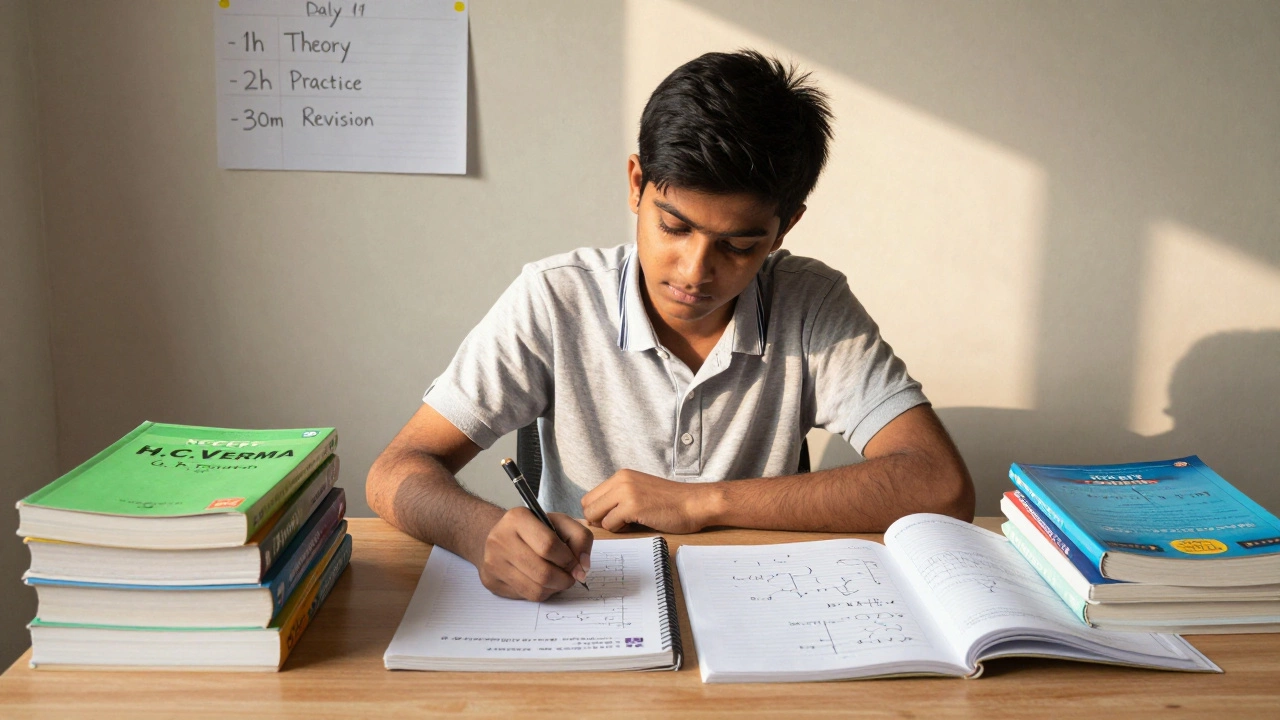
IIT JEE Preparation: How to Crack the Hardest Engineering Exam in India
When you start IIT JEE preparation, the national-level engineering entrance exam in India that determines admission to the Indian Institutes of Technology. Also known as Joint Entrance Examination, it’s not just a test—it’s a full-time commitment that reshapes how you think, study, and push through failure. Every year, over 1.5 million students take it. Only about 10,000 get into the top IITs. This isn’t luck. It’s strategy, endurance, and knowing exactly where to focus.
JEE Main, the first stage of the exam, tests your speed and accuracy across Physics, Chemistry, and Math. JEE Advanced, the second and tougher stage, demands deep conceptual mastery and problem-solving creativity. Many students think Math is the hardest, but according to student feedback and past papers, Physics often trips people up because it blends theory with real-world applications in ways you can’t memorize. Chemistry? It’s the wild card—some find it easy because it’s fact-heavy, others lose sleep over organic reaction mechanisms.
Success in IIT JEE preparation doesn’t come from studying 16 hours a day. It comes from studying smart. Top scorers don’t just solve problems—they analyze why they got them wrong. They track patterns: which topics repeat every year, which coaching materials actually match the exam style, and which study habits drain energy without results. You’ll find posts here that break down the hardest JEE subject, compare the best books for each topic, and show how to build a daily routine that doesn’t burn you out.
Coaching institutes like Allen and Aakash aren’t magic. They give structure, but the real difference is made by how you use their material. Some students thrive with NV Sir’s physics problem sets; others get lost in the pace. The right fit depends on your starting point, your patience for tough problems, and whether you learn better through repetition or deep dives. This collection includes real student stories, book reviews, and breakdowns of what actually works in 2025—not what’s sold in ads.
You’ll also find insights on how stress affects performance, why some students crack JEE after three attempts while others give up after one, and how the mental game matters more than raw talent. This isn’t about being the smartest. It’s about being the most consistent, the most self-aware, and the most willing to fix what’s broken.
Below, you’ll find real, tested advice from students who’ve been through it—what books to skip, which YouTube channels actually help, how to pick a coaching center that fits your budget and learning style, and how to turn your weakest subject into your strongest. No fluff. No hype. Just what you need to move forward.