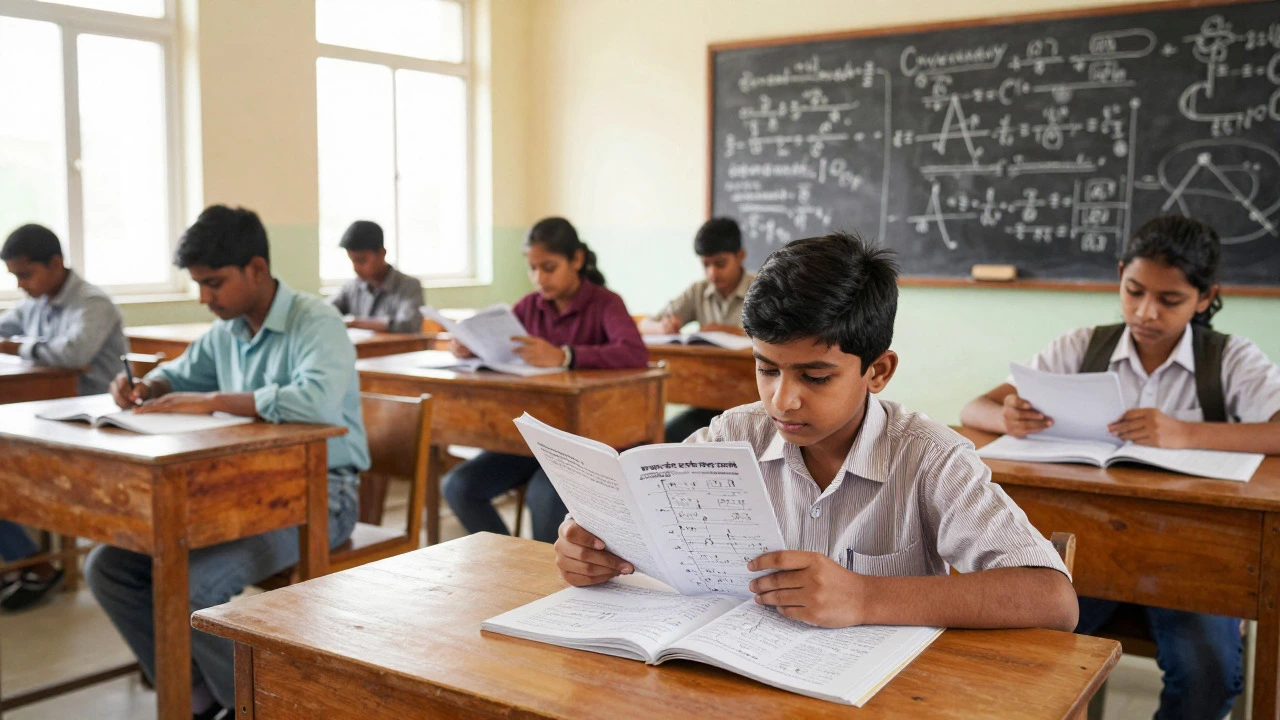
CBSE Zone Comparison Tool
Have you ever wondered why your cousin in Delhi gets a different math test than the one sitting next to you in Mumbai? It’s not a glitch. It’s by design. CBSE is the Central Board of Secondary Education, India's premier national board that sets curriculum and exam standards for schools across the country. While it aims for uniformity, there are specific regional variations, particularly concerning Delhi, that often confuse students and parents alike.
The short answer? It’s rarely about the *subject matter* being fundamentally different, but rather about administrative jurisdiction, language options, and historical precedents. Let’s break down exactly why this happens and what it means for students navigating the Indian education landscape.
Understanding the CBSE Structure
To grasp why papers differ, we first need to understand how Central Board of Secondary Education operates. It is not a single monolithic entity issuing identical PDFs to every school in India. Instead, it functions through zonal offices. The board has seven zonal offices located in New Delhi, Bhopal, Chandigarh, Kolkata, Mumbai, Noida, and Pune.
Here is the critical distinction: New Delhi Zonal Office handles schools in Delhi, Haryana, Himachal Pradesh, Jammu & Kashmir, Ladakh, Punjab, and Uttarakhand. This zone has a slightly larger population of affiliated schools compared to some other zones, leading to distinct logistical and administrative handling.
However, the core syllabus for Class 10 and Class 12 remains standardized nationwide. So, if the syllabus is the same, where does the "different paper" perception come from? It usually boils down to three factors: question paper sets, language mediums, and local administrative adjustments.
The Myth of Separate Syllabi
First, let’s clear up the biggest misconception. There is no separate "Delhi CBSE Syllabus." A student studying Physics in Class 12 in Delhi follows the same chapter list, mark distribution, and competency goals as a student in Chennai or Hyderabad.
What differs is the **execution** of the examination process. CBSE uses a system of multiple question paper sets (usually Set A, B, C, and D) to prevent cheating and ensure fairness. These sets have different questions but equal difficulty levels. Sometimes, due to printing or distribution logistics, certain zones might receive specific sets earlier or handle re-examinations differently. This can create an illusion that the "paper" itself is unique to Delhi, when in reality, it’s just a different variant of the same standardized test.
Language Medium and Regional Context
This is where Delhi stands out more clearly. As the capital city, Delhi has a diverse demographic with a high concentration of Hindi-speaking students alongside English-medium learners. CBSE allows schools to offer exams in various languages, including Hindi, Urdu, Punjabi, Bengali, Tamil, Telugu, Kannada, Malayalam, Marathi, Gujarati, and Assamese.
In Delhi, the demand for Hindi-medium papers is significantly higher than in coastal states like Kerala or Tamil Nadu. Consequently, the Hindi medium paper is a standard, heavily utilized format in Delhi schools. If a student compares their English-medium paper with a friend’s Hindi-medium paper, the wording will be entirely different, even if the underlying concepts are identical. This linguistic variation is often mistaken for a "different paper."

Administrative Jurisdiction and Local Schools
Another factor is the presence of state-specific boards operating alongside CBSE. In Delhi, while CBSE schools are prominent, many government and private schools follow the Delhi State Board (now largely integrated under CBSE for secondary education, but historical distinctions remain in public memory). For years, there was a parallel structure where state-run schools had their own assessments. Although most state schools in Delhi now align with CBSE patterns, the legacy of having a distinct state educational authority creates a persistent belief among parents that "Delhi papers" are special.
Furthermore, Delhi hosts numerous international and private institutions that may have internal pre-board exams or mock tests that feel stricter or different in style compared to other regions. Students often conflate these internal assessments with the final board exam, adding to the confusion.
Comparing Exam Patterns Across Zones
Let’s look at a practical comparison to see where differences actually manifest. Below is a table highlighting the key aspects of CBSE examinations in the Delhi Zone versus other major zones like Mumbai or Kolkata.
| Feature | Delhi Zone | Mumbai Zone | Kolkata Zone |
|---|---|---|---|
| Primary Language Demand | Hindi & English | English & Marathi | English & Bengali |
| Syllabus Content | National Standard | National Standard | National Standard |
| Paper Sets Distributed | A, B, C, D | A, B, C, D | A, B, C, D |
| Re-exam Frequency | High (due to large volume) | Medium | Medium |
| Local Administrative Body | New Delhi Zonal Office | Mumbai Zonal Office | Kolkata Zonal Office |
Notice that the syllabus content is identical. The differences lie in language preference and administrative volume. Because Delhi has one of the highest concentrations of CBSE-affiliated schools, any minor delay or change in policy is amplified here, making it seem like the rules are different.
Why Parents Think Papers Are Different
Perception plays a huge role. When a student in Delhi scores lower than expected, they often blame the "tougher paper." Conversely, if a student in another region scores high, they might say the paper was "easy." This is survivorship bias. Since Delhi is the political and educational hub, its results get more media coverage and social media discussion. Every nuance is dissected, creating a narrative that the Delhi paper is uniquely challenging or structured differently.
In reality, CBSE conducts rigorous analysis after each exam to ensure parity between all paper sets. If one set were significantly harder, the board would adjust marks or release supplementary instructions. This statistical leveling ensures that whether you take Set A in Delhi or Set C in Bangalore, your grade reflects your competence, not your geography.
Practical Implications for Students
So, what should you do if you’re moving to Delhi or comparing yourself to peers elsewhere? Here are some actionable tips:
- Focus on Concepts, Not Questions: Since the syllabus is national, mastering the core concepts guarantees success regardless of which paper set you receive.
- Practice Multiple Languages: If you’re in Delhi and considering Hindi medium, practice reading technical terms in Hindi. The logic remains the same, but the phrasing changes.
- Ignore Regional Rumors: Don’t let friends tell you their paper was "easier." Stick to official CBSE notifications and past year papers from the national archive.
- Check School-Specific Mocks: Some Delhi schools have stricter internal marking schemes. Use these to build resilience, but remember they aren’t the final board exam.
Understanding that the "difference" is mostly administrative and linguistic helps remove anxiety. You are preparing for a national standard, not a local quirk.
Frequently Asked Questions
Is the CBSE syllabus in Delhi different from other states?
No, the core syllabus for Classes 9-12 is identical across all CBSE-affiliated schools in India. Any perceived differences are due to language mediums or local administrative handling, not content changes.
Why do Delhi students often use Hindi medium papers?
Delhi has a high population of Hindi-speaking families. CBSE offers exams in multiple languages, and Hindi is one of the most requested mediums in the Northern Zone, leading to a higher volume of Hindi papers compared to Southern or Eastern zones.
Does the Delhi Zonal Office set its own questions?
No, question papers are designed centrally by the CBSE headquarters in New Delhi. The zonal offices are responsible for distribution, invigilation, and marking coordination, but not question creation.
Are re-examinations in Delhi handled differently?
Re-examinations follow the same national guidelines. However, due to the large number of candidates in the Delhi Zone, scheduling and result declaration timelines can sometimes vary slightly compared to smaller zones, though the process remains standardized.
Should I worry about getting a 'harder' paper in Delhi?
No. CBSE uses multiple equivalent paper sets (A, B, C, D) to ensure fairness. Statistical analysis confirms that average scores across sets are comparable. Focus on consistent preparation rather than worrying about regional luck.