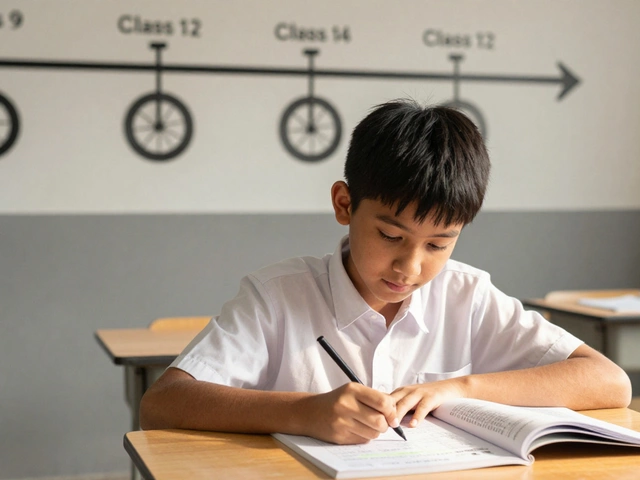
Development Journey in Indian Education: From Boards to Careers
When you talk about the development journey, the path a student takes from school to career in India’s high-pressure education system. Also known as the educational trajectory, it’s not just about grades—it’s about survival, strategy, and long-term growth. This journey starts in classrooms with textbooks and ends in boardrooms, labs, or coding hubs. And it’s shaped by choices most students don’t even realize they’re making until it’s too late.
At the heart of this journey is the Indian education system, a complex mix of national boards, coaching institutes, and digital tools that define how students prepare for life after school. CBSE, ICSE, and state boards aren’t just curriculums—they’re gatekeepers. CBSE pushes students toward JEE and NEET early, turning classrooms into exam factories. ICSE builds deeper understanding but offers less direct access to top engineering and medical colleges. State boards vary wildly: some are relaxed, others are just as intense. Your board doesn’t just teach you math or biology—it trains your mindset. And that mindset carries into coaching centers like Allen and Aakash, where the real pressure begins.
The development journey, isn’t limited to school hours or coaching classes. Also known as the learning path, it now includes YouTube channels, English apps, online platforms like Google Classroom, and even side hustles teaching courses on Teachable. Students who succeed aren’t just the ones who study the most—they’re the ones who adapt. They learn how to sleep right for JEE, how to debug their own thinking when coding gets hard, or how to speak English confidently without a tutor. They know that NEET isn’t about how many times you take the exam—it’s about how well you learn from each attempt. And they understand that the highest-paying skills in 2025—AI, cybersecurity, Python—are not taught in most schools. You have to find them yourself.
Some of this journey is about competition: UPSC, JEE, NEET. Others are about survival: choosing the right coaching, avoiding burnout, figuring out if Dubai schools or Indian boards give you a better shot at the future. The hardest thing isn’t the syllabus—it’s staying consistent when everyone around you is falling apart. The most powerful tool isn’t a textbook or an app—it’s knowing your own limits and pushing past them smartly.
What follows are real stories from students who’ve walked this path. You’ll find out why NV Sir works for some but not others, which learning platform actually pays, and how sleep habits make or break JEE aspirants. These aren’t theories. These are experiences. And they’re the only map you need if you’re trying to make sense of your own development journey in Indian education.

Popular Post