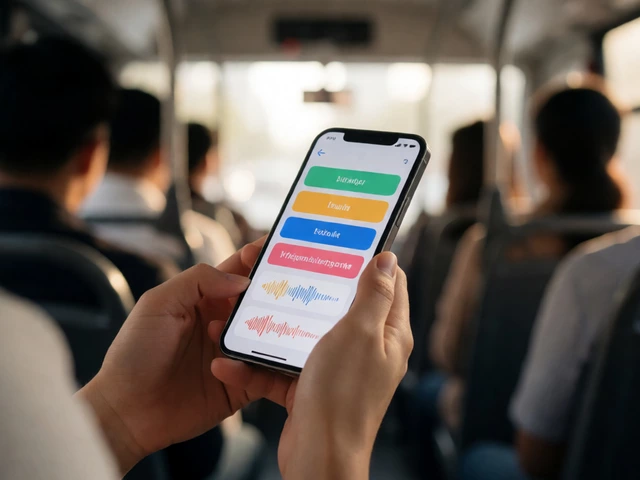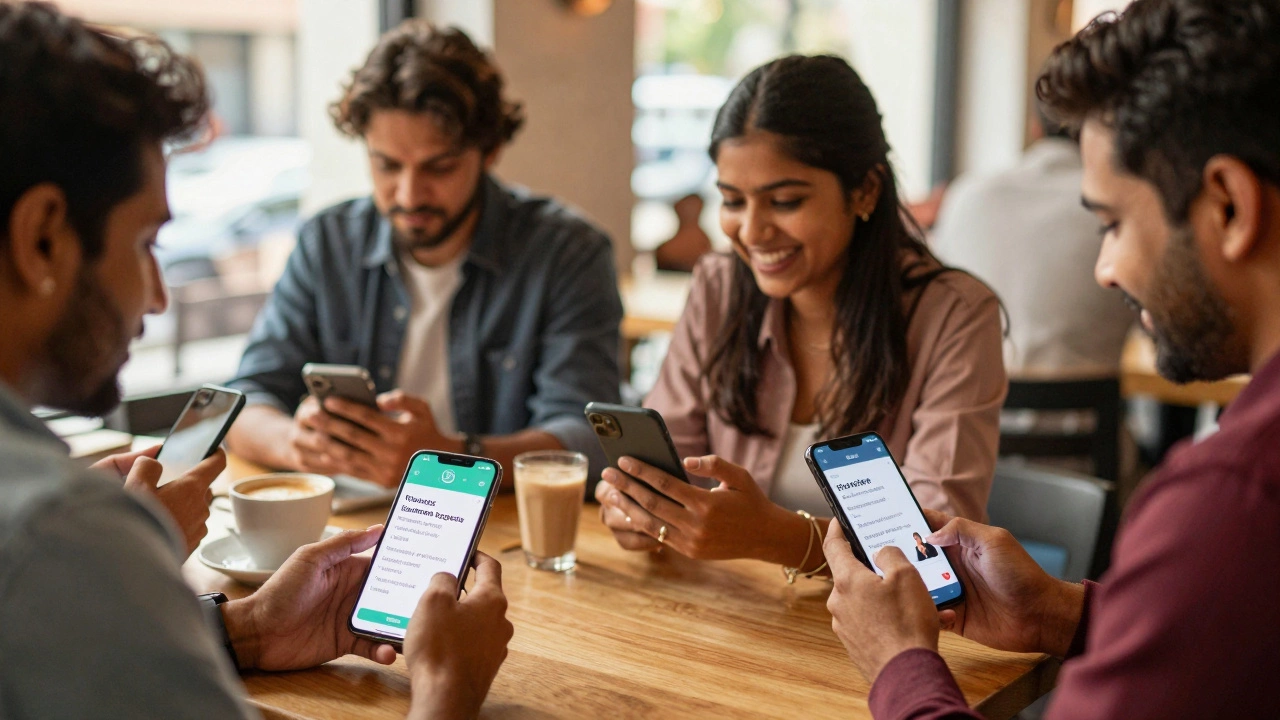
If you’re trying to learn English and feel stuck in a cycle of memorizing words that vanish the moment you close your app, you’re not alone. Thousands of people download language apps every day, but only a fraction actually start speaking fluently. The problem isn’t the apps-it’s picking the wrong one for your goals. Some apps focus on grammar drills. Others push vocabulary flashcards. But if you want to actually speak English with confidence, you need something that builds real conversation skills, not just test scores.
What makes an English learning app actually work?
Not all apps are created equal. The best ones don’t just show you words-they make you use them. Look for apps that give you real-time feedback on pronunciation, simulate everyday conversations, and adapt to your mistakes. A good app feels like a conversation partner, not a textbook. It should track your progress in speaking, not just multiple-choice answers.
According to a 2024 study by the University of Cambridge Language Research Center, learners who practiced speaking daily through interactive apps improved their fluency 40% faster than those who only studied vocabulary. The key? Active output. Saying words out loud, even if you mess up, rewires your brain faster than passive listening.
Duolingo: Great for beginners, not enough for speaking
Duolingo is the most downloaded English app in the world. It’s colorful, gamified, and free. You earn streaks, unlock levels, and get rewarded with virtual coins. It’s addictive-and that’s part of why it works for building daily habits.
But here’s the catch: Duolingo rarely asks you to speak beyond short phrases like “I eat apples” or “She walks to school.” There’s no real conversation. No back-and-forth. No correcting your accent when you say “thirty” like “thir-tee.” If you’re just starting out and want to build basic vocabulary, it’s fine. But if you want to hold a real conversation, you’ll hit a wall fast.
Babbel: Built for real conversations
Babbel is different. It was designed by language teachers who know what learners actually struggle with. Instead of random vocabulary lists, each lesson is based on real-life situations: ordering coffee, asking for directions, talking about your job.
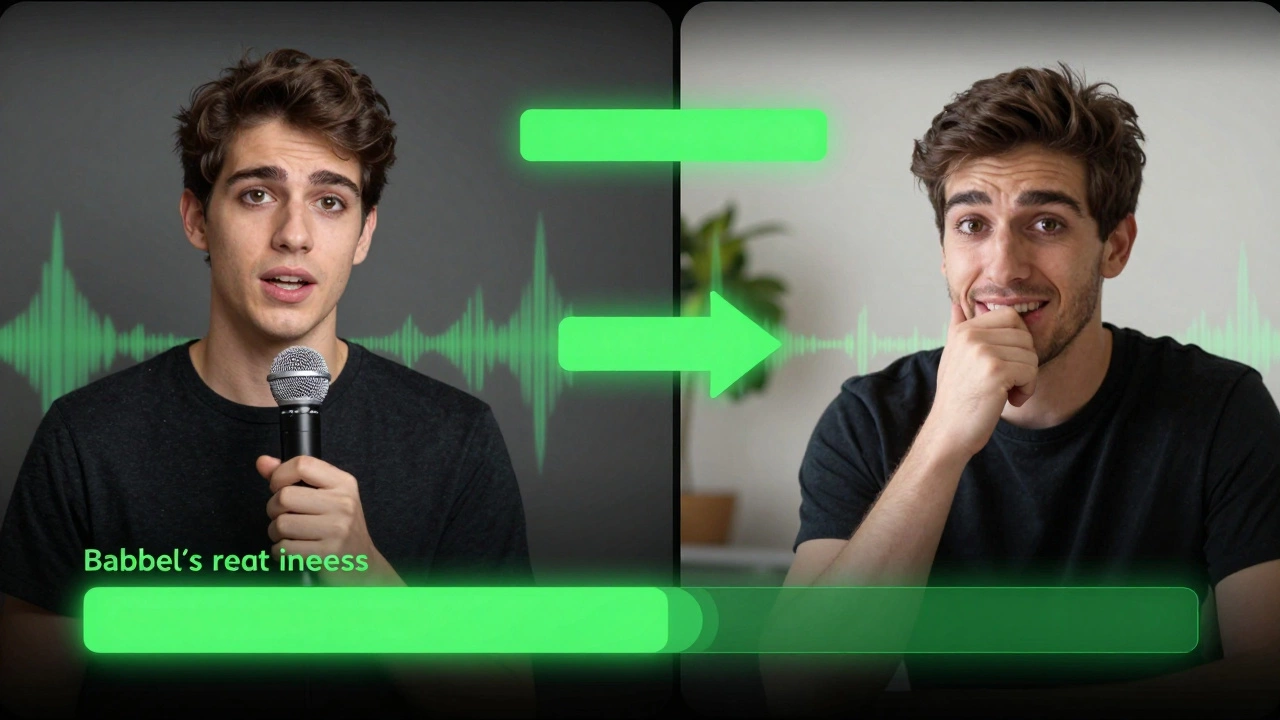
What sets Babbel apart is its speech recognition. It listens to you speak full sentences and gives instant feedback on pronunciation. If you say “I am go to work,” it doesn’t just mark you wrong-it shows you how to say “I’m going to work” with the right rhythm and intonation. You also get grammar tips woven into the dialogue, not as separate drills.
After 10 weeks of using Babbel for 15 minutes a day, users in a 2025 user survey reported feeling confident enough to speak with native speakers on video calls. That’s not hype-it’s data from over 12,000 learners.
ELSA Speak: Your personal accent coach
If your biggest problem is being misunderstood because of your accent, ELSA Speak is the app you need. It uses AI trained on thousands of native English speaker recordings to analyze your pronunciation down to the phoneme level.
For example, if you say “think” as “tink,” ELSA will highlight the /θ/ sound and show you how to place your tongue. You’ll get a score out of 100, and you can replay your voice next to a native speaker’s. It’s like having a speech therapist in your pocket.
One user, Maria from Brazil, used ELSA for six months before her job interview in London. She scored 92% on pronunciation accuracy and got the job. She didn’t know every word in the dictionary-but she could say them clearly.
Busuu: Learn with real people
Busuu stands out because it connects you with native speakers. After completing a lesson, you record yourself speaking and send it to a real person who speaks English as their first language. They correct your grammar, suggest better phrasing, and even give you cultural tips.
It’s not just automated feedback-it’s human interaction. You also get to help others learn your native language. This exchange keeps you motivated. You’re not just learning English-you’re building a connection.
Over 80% of Busuu users say they’ve had real conversations with native speakers within three months of using the app. That’s rare in the language app world.
Memrise: Learn English like a local
Memrise doesn’t teach textbook English. It teaches how people actually talk. You’ll learn phrases like “I’m gonna grab a coffee” instead of “I am going to have a cup of coffee.” It uses real videos of native speakers in London, New York, Sydney, and beyond.
The app breaks down slang, idioms, and natural rhythm. You’ll hear how people shorten words, drop sounds, and use tone to show emotion. It’s not just vocabulary-it’s cultural fluency.
One user from Japan said he finally understood American TV shows after using Memrise for two months. Before, he could read every word but had no idea what people were really saying. Now he laughs at the jokes.
How to pick the right app for you
Here’s a quick guide:
- If you’re a total beginner and want to build daily habits → Duolingo
- If you want to speak naturally in real-life situations → Babbel
- If your accent holds you back → ELSA Speak
- If you want feedback from real people → Busuu
- If you want to understand how English is really spoken → Memrise
You don’t need all five. Pick one that matches your biggest struggle. Trying to use too many apps at once just leads to burnout.
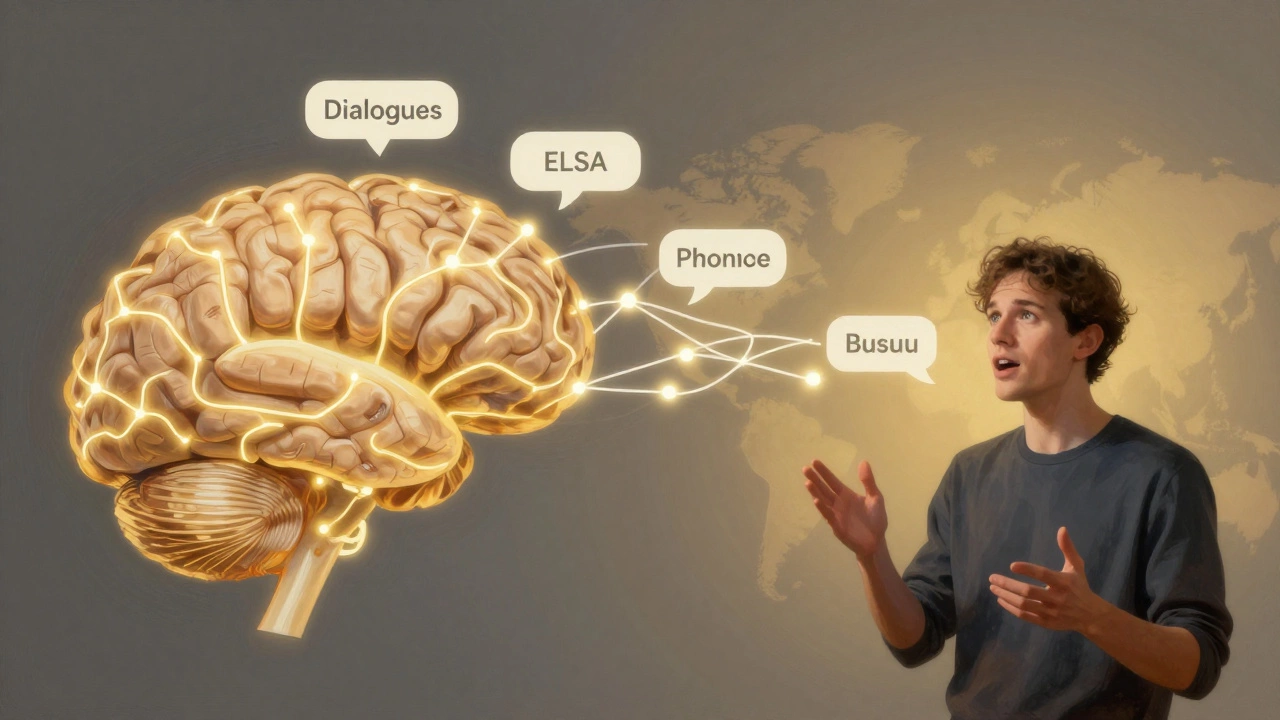
What most people get wrong
Most learners think they need to study more. They spend hours reading grammar rules or memorizing lists. But fluency isn’t about how much you know-it’s about how often you use it.
The real mistake? Waiting until you’re “ready” to speak. You’ll never feel ready. The only way to get better is to speak, even if you sound silly. The best apps don’t wait for you to be perfect-they help you get better while you’re still learning.
Final tip: Combine apps with real practice
No app replaces talking to a real person. Even the best AI can’t fully mimic the messiness of a live conversation. Use your app to build confidence, then find a language exchange partner on Tandem or HelloTalk. Spend 15 minutes a day speaking with someone who doesn’t care if you make mistakes.
That’s the secret: practice, not perfection.
Can I learn English speaking just with apps?
Yes, you can build strong speaking skills using apps-but only if they focus on active output, not passive learning. Apps like Babbel, ELSA Speak, and Busuu give you real speaking practice with feedback. But to reach true fluency, you’ll eventually need to talk to real people. Apps are the training ground, not the finish line.
Are free apps good enough to learn English?
Free apps like Duolingo and Memrise can help you start, but they often limit speaking practice behind paywalls. If you want to improve pronunciation or have real conversations, you’ll need a paid plan. Paid apps like Babbel and ELSA Speak offer deeper feedback and more realistic practice. You get what you pay for-especially when speaking is your goal.
How long does it take to speak English fluently with an app?
With consistent daily use (15-20 minutes), most users start holding basic conversations in 3-4 months. Fluency-being able to speak smoothly on unexpected topics-takes 6-12 months. The key isn’t time, it’s frequency. Five 10-minute sessions a week beat one 50-minute session.
Which app is best for business English?
Babbel has the strongest business English curriculum, with lessons on meetings, emails, presentations, and negotiations. ELSA Speak also helps with professional pronunciation. If you need industry-specific vocabulary, look for apps that let you choose “Business English” as a learning path.
Do I need to pay for an English learning app?
You don’t have to pay to start, but if you’re serious about speaking, you’ll need a paid plan eventually. Free versions often block speech recognition, conversation practice, and advanced feedback. A monthly subscription (usually $8-$15) gives you access to everything that actually helps you speak. It’s cheaper than a tutor and more effective than free apps alone.
Next steps: What to do today
Don’t wait for the perfect app. Pick one from this list and start today. Download Babbel or ELSA Speak. Do one lesson. Speak out loud-even if you’re alone. Record yourself. Listen back. Don’t judge, just observe. Then do it again tomorrow.
Fluency doesn’t come from studying. It comes from speaking. Repeatedly. Messily. Until it becomes natural.